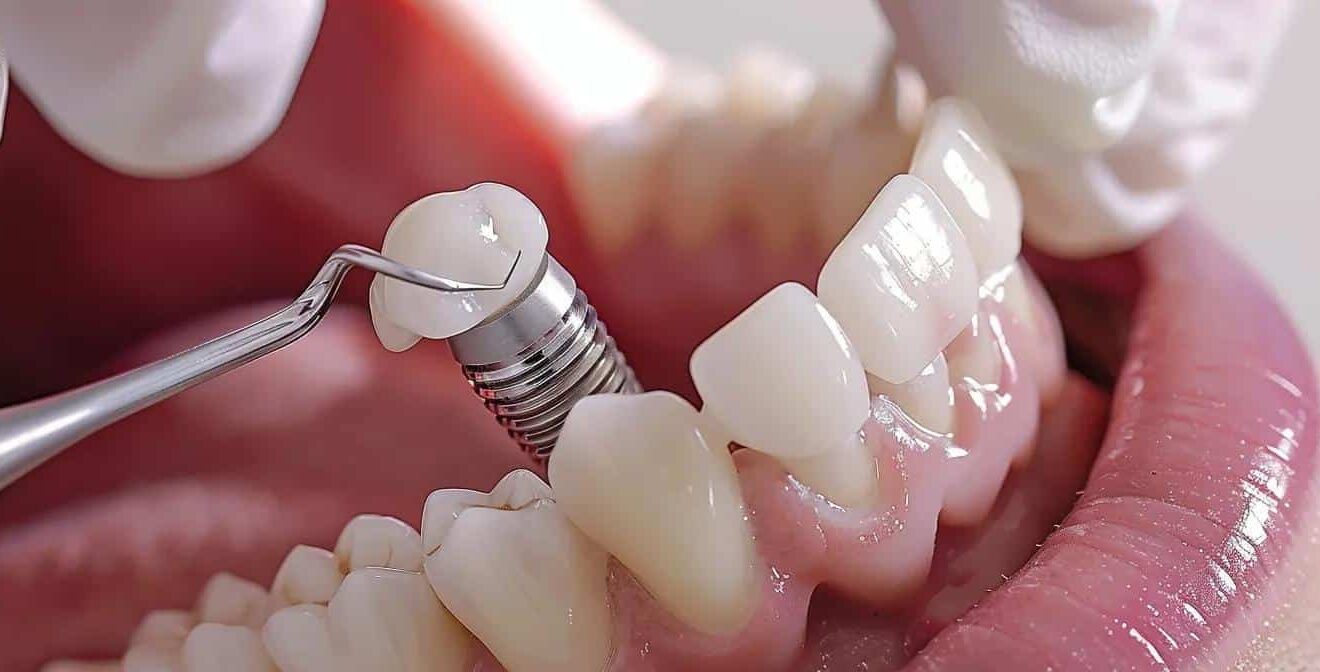
Dental implants replace missing teeth with titanium posts that fuse to the jawbone, and this creates a stable foundation for artificial teeth. They preserve bone density over time. Patients who choose implants may avoid the bone loss and shifting that occur when missing teeth are left untreated, which makes implants a long-term solution. Here is more information on what dental implants are and their long-term benefits:
What Are Dental Implants?
A dental implant is a small titanium post surgically placed into the jawbone to act as an artificial tooth root. Once the post is positioned in the jaw, it provides a stable foundation for a crown, bridge, or denture. Titanium is the material of choice for this application because it is biocompatible, which means the body generally accepts it without rejection. Unlike dentures or bridges, dental implants don’t rely on neighboring teeth for support; they anchor directly into the bone. Because implants integrate with the jawbone itself, patients may describe the final result as closely resembling a natural tooth in both appearance and function.
How Do They Work?
Dental implants work through osseointegration; this is the process in which the jawbone grows around the titanium post and locks it into place. This fusion typically takes several months. Once the bone and implant form a sufficiently strong bond, a dentist attaches an abutment, followed by the final restoration.
The process unfolds in distinct stages, and each stage serves a specific clinical purpose. First, the dentist assesses bone density and overall oral health to confirm the patient is a suitable candidate. The implant is then placed surgically, and the healing period begins. After osseointegration is complete, the dentist attaches the visible restoration to complete the replacement tooth. Recovery time varies.
Who Do They Help?
Dental implants suit a broad range of patients. Candidates typically include:
- Patients who have lost one or more teeth due to injury, decay, or gum disease
- Individuals whose dentures no longer fit properly
- Healthy adults of varying ages who meet the necessary bone density and health requirements
A dentist will review each patient’s health history before recommending implants.
What Are the Long-term Benefits?
Dental implants preserve jawbone density by stimulating the bone the same way a natural tooth root does. When a tooth is lost, the underlying bone gradually deteriorates without stimulation, and this process can accelerate without intervention. Implants prevent this deterioration by transferring chewing pressure directly to the bone, which keeps it active and intact.
This preservation extends to facial structure, which depends on adequate bone support to maintain its shape. Patients who lose multiple teeth without replacement may notice a sunken appearance over time. This occurs because the underlying bone shrinks without stimulation. Implants help maintain jaw and facial shape for years after placement, and they can last many years with proper oral hygiene.
Implants function and feel like natural teeth during eating and speaking. Patients avoid slipping or discomfort, and they benefit from a stable, secure fit that supports daily oral function. With consistent care, including regular dental visits, implants can last decades, which makes them a durable, long-term solution for tooth loss.
Consult a Dentist Today
Dental implants offer a long-term approach to replacing missing teeth, from preserving bone density to supporting facial structure and daily function. The process requires a healing period and a commitment to oral hygiene, but the outcome provides stability that other replacement options can’t always match. If you are evaluating implants, consult a dentist to review bone health, medical history, and candidacy for the procedure.