Our joints, especially the knees and hips, play a crucial role in everyday life. They allow us to walk, run, climb stairs, and perform countless other activities. Over time, however, these joints can wear down due to aging, injury, or diseases like osteoarthritis. When pain and limited mobility start affecting daily life, joint replacement surgery becomes a vital solution. This article explores knee replacement and hip replacement services, their benefits, procedures, recovery, and what patients can expect.
Understanding Knee and Hip Problems
Knee Problems
The knee is one of the largest and most complex joints in the body, consisting of bones, cartilage, ligaments, and tendons. Over time, the knee joint can experience:
- Osteoarthritis: Wear and tear of cartilage, leading to pain, stiffness, and swelling.
- Rheumatoid arthritis: An autoimmune disease causing joint inflammation.
- Injuries: Ligament tears, fractures, or severe trauma affecting joint function.
Knee pain can make even simple tasks like walking, standing, or sitting extremely difficult. When conservative treatments such as medications, physical therapy, or injections fail, knee replacement surgery is often recommended.
Hip Problems
The hip is a ball-and-socket joint that supports the body’s weight and allows a wide range of motion. Hip problems can include:
- Osteoarthritis: Gradual deterioration of cartilage causing pain and stiffness.
- Avascular necrosis: A condition where blood supply to the hip bone is reduced, leading to bone death.
- Hip fractures: Common in older adults, especially after falls.
Hip pain can severely impact mobility, balance, and independence. When other treatments don’t provide relief, hip replacement surgery is an effective option.
What Are Knee Replacement and Hip Replacement Surgeries?
Knee Replacement Surgery
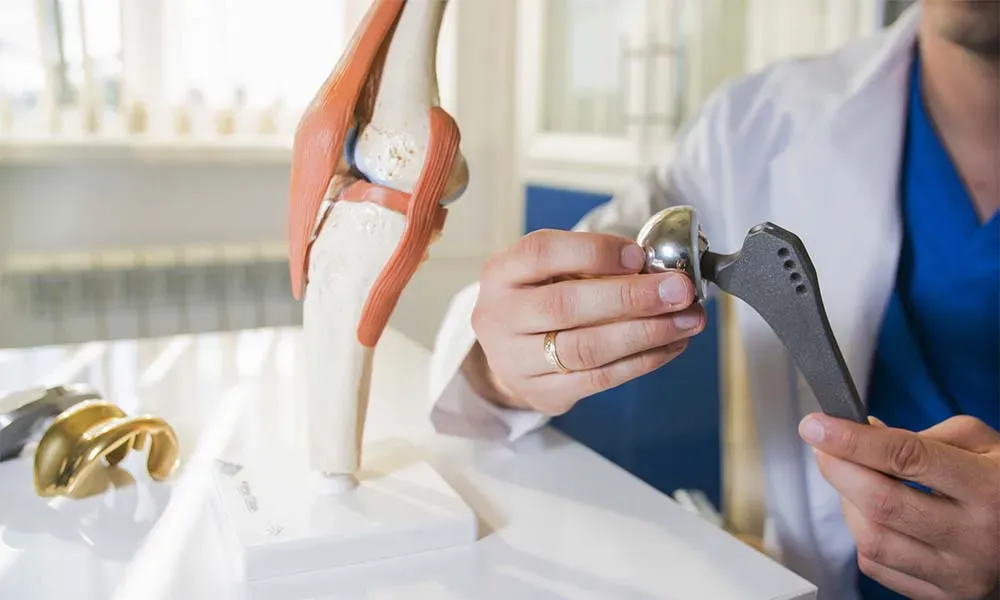
Knee replacement, also known as knee arthroplasty, is a surgical procedure where a damaged knee joint is replaced with artificial components called prostheses. There are two main types:
- Total Knee Replacement (TKR) – The entire knee joint is replaced.
- Partial Knee Replacement (PKR) – Only the damaged part of the knee is replaced.
The goal is to relieve pain, restore function, and improve quality of life. Modern knee prosthetics are designed to mimic natural joint movement, providing long-lasting results.
Hip Replacement Surgery
Hip replacement, or hip arthroplasty, involves removing the damaged hip joint and replacing it with an artificial one. There are two main types:
- Total Hip Replacement – Both the ball (femoral head) and socket (acetabulum) are replaced.
- Partial Hip Replacement – Only the ball is replaced, typically in certain fractures.
Hip replacement can restore mobility, reduce pain, and allow patients to return to their daily activities with greater comfort.
Who Needs Knee or Hip Replacement?
Patients typically consider joint replacement when:
- Chronic pain limits daily activities.
- Stiffness reduces range of motion.
- Non-surgical treatments (medications, physical therapy, injections) are no longer effective.
- X-rays show significant joint damage or deformity.
Both knee and hip replacements are common in older adults, but younger patients with joint injuries or arthritis may also benefit.
Benefits of Knee and Hip Replacement Services
Knee and hip replacement surgeries offer multiple benefits:
- Pain Relief – Severe joint pain is often eliminated after surgery.
- Improved Mobility – Patients regain the ability to walk, climb stairs, and perform everyday tasks.
- Enhanced Quality of Life – Returning to active life and participating in hobbies becomes possible.
- Long-lasting Results – Modern prosthetics can last 15–20 years or longer with proper care.
- Correcting Deformities – Surgery can realign the joint and improve posture and gait.
The Surgical Procedure
Preparation
Before surgery, patients undergo:
- Physical examinations and imaging tests (X-rays, MRI).
- Blood tests and medical evaluations to ensure safety.
- Pre-surgery exercises to strengthen muscles around the joint.
Surgery
- Knee Replacement: The surgeon removes damaged cartilage and bone, shapes the joint, and implants the prosthesis.
- Hip Replacement: The surgeon removes the damaged femoral head and prepares the hip socket for the implant.
Both procedures usually require general or regional anesthesia. Surgery typically lasts 1–2 hours, depending on complexity.
Recovery and Rehabilitation
Recovery is a crucial part of joint replacement success. Most patients stay in the hospital for 2–5 days, followed by home care or rehabilitation.
Physical Therapy
- Strengthens muscles around the joint.
- Improves flexibility and range of motion.
- Helps patients walk safely and regain independence.
Lifestyle Adjustments
- Using assistive devices like walkers or canes initially.
- Avoiding high-impact activities for the first few months.
- Maintaining a healthy weight to reduce stress on the joint.
Full recovery can take 3–6 months, with continued improvement over a year. Patients usually experience minimal pain and significant improvement in mobility.
Choosing the Right Service Provider
When selecting knee or hip replacement services, consider:
- Experience and Expertise – Choose surgeons specialized in joint replacement.
- Technology and Facilities – Advanced prosthetics, minimally invasive techniques, and modern surgical equipment improve outcomes.
- Patient Support – Pre- and post-surgery guidance, physical therapy, and follow-up care.
- Success Rates and Reviews – Look for hospitals or clinics with high patient satisfaction and positive outcomes.
Minimally Invasive and Robotic-Assisted Options
Many modern joint replacement centers offer minimally invasive or robotic-assisted surgery. These approaches:
- Reduce incision size.
- Minimize tissue damage.
- Shorten hospital stays and recovery time.
- Improve precision in implant placement.
These advanced techniques enhance patient comfort and long-term joint function.
Preventing Future Joint Problems
Even after replacement, joint health is important. Tips include:
- Maintaining a healthy weight to reduce joint stress.
- Regular low-impact exercises like swimming or cycling.
- Following physiotherapy and exercise routines prescribed by your doctor.
- Avoiding high-impact sports that may damage the prosthetic joint.
FAQs About Knee and Hip Replacement
1. How long do knee and hip replacements last?
Modern knee and hip prosthetics typically last 15–20 years, sometimes longer with proper care.
2. Is joint replacement surgery painful?
Patients may experience mild to moderate pain initially, but pain is managed with medications and decreases significantly over time.
3. Can I return to normal activities after surgery?
Yes, most patients resume daily activities within a few weeks and can gradually return to low-impact exercises within months.
4. What are the risks of knee and hip replacement?
As with any surgery, risks include infection, blood clots, implant loosening, or stiffness. These are minimized with proper care and follow-up.
5. How do I know if I need knee or hip replacement?
Consult an orthopedic specialist if you have chronic joint pain, stiffness, or reduced mobility, and other treatments haven’t helped. X-rays and medical evaluations can determine the need for surgery.
Conclusion
Knee and hip replacement services are life-changing procedures that restore mobility, relieve pain, and improve overall quality of life. Advances in surgical techniques, prosthetics, and rehabilitation have made these surgeries safer and more effective than ever. Patients considering joint replacement should seek experienced orthopedic specialists, follow pre- and post-surgery guidance, and commit to rehabilitation. With the right care, knee and hip replacement surgeries can help you walk, move, and enjoy life again with confidence.