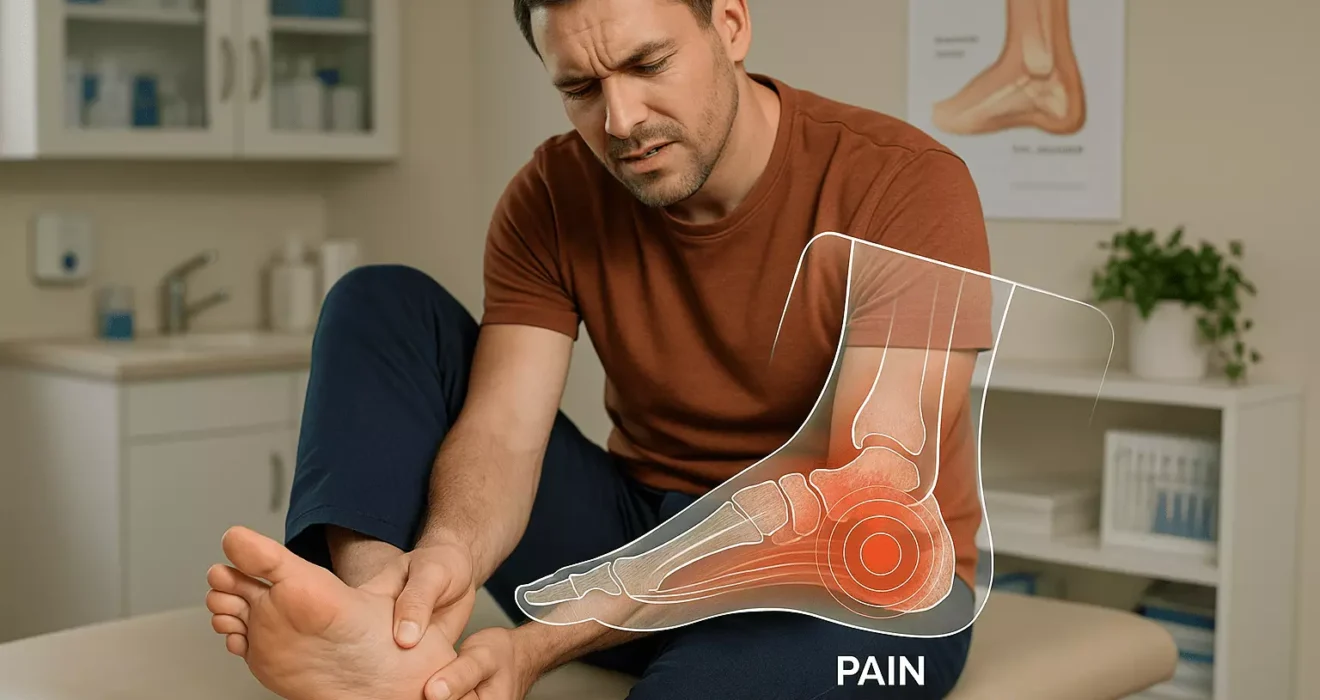
Plantar fasciitis develops when the thick band of tissue along the bottom of your foot becomes irritated, and it causes significant pain. This band, called the plantar fascia, connects your heel bone to the base of your toes. Many people feel sharp heel pain with their first steps in the morning, and the pain eases with movement. While in recovery, this is how stretching and exercising can help:
Relaxing Tight Muscles
Tight calf muscles pull on the heel bone and add strain to the plantar fascia. The Achilles tendon links your calf to your heel, and stiffness there limits ankle motion. When your ankle moves less, your foot flattens more with each step. Try the following stretches to control plantar fasciitis symptoms:
- Wall calf stretch: Place your hands on a wall, step one foot back, and keep that heel flat. Hold for 30 seconds.
- Towel stretch: Sit with your legs straight and loop a towel around the ball of your foot. Pull gently for 30 seconds.
- Plantar fascia stretch: Cross one foot over the opposite knee and pull your toes back toward your shin.
Mild tension during a stretch is normal. If a stretch causes sharp pain, ease off to a milder position. Slow, steady holds work better than bouncing, and consistency matters more than intensity. Many people stretch their feet before getting out of bed in the morning.
Promoting Circulation
Blood carries oxygen and nutrients to injured tissue, and the plantar fascia receives a fairly limited supply. When the fascia has few blood vessels, it heals slowly. Gentle, regular movement increases blood flow to the foot and lower leg. Short, frequent sessions spread this effect across your day.
Toe curls and ankle circles work well for this purpose. Aim for 10 to 15 repetitions of each exercise. While you sit at a desk, you may trace the alphabet with your big toe. This activates small muscles in the foot, and it keeps the ankle joint moving.
When you sit or stand for long periods, circulation in your lower legs slows. A short walk helps, and a set of calf raises adds more movement. Rolling your foot over a frozen water bottle combines light massage with cold therapy. Try this for five to ten minutes at the end of the day.
Alleviating Pain
Stretching lengthens tight tissue, and strengthening builds support for the arch. Both approaches aim to reduce strain on the heel. When the arch has more support, the plantar fascia carries less load. Results vary from person to person.
Towel scrunches and marble pickups strengthen the small muscles under your foot. Progress typically takes several weeks, and steady practice matters more than effort on any single day. Keep a simple log of your pain levels and daily exercises. If pain increases during an exercise, stop and try the next day again.
Preventing Injury
Once your symptoms ease, regular exercise helps keep your feet strong and flexible. Plantar fasciitis often returns, and weak or tight muscles raise that risk. A few daily habits support long-term foot health.
- Wear shoes with firm arch support and a cushioned heel
- Increase walking or running distance by small amounts each week
- Avoid walking barefoot on hard floors for long periods
- Continue calf and foot stretches a few times each week
Get Treated for Plantar Fasciitis
If your heel pain lasts longer than a few weeks, schedule a visit with a healthcare provider. Home exercises address only one part of the problem. An exam helps identify other causes of heel pain. Your provider will review your options, and you may receive guidance on night splints, orthotics, or physical therapy.